
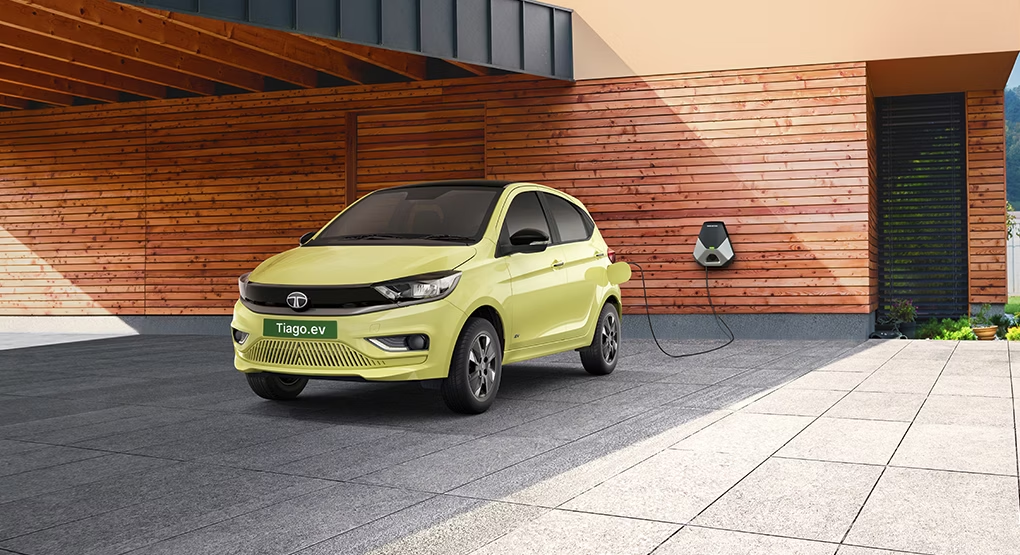
The Tata Tiago EV AC not-cooling problem is one of the most searched issues by Tiago EV owners across India, especially during the brutal summer months when cabin temperatures can cross 45°C. If you’ve been sweating in your electric car with the AC button lit up and no cold air coming out, you’re not alone — and in most cases, the fix is simpler than you’d expect.
This article covers every real cause behind this problem, what you can check yourself, when to visit a service center, and what to expect in terms of repair costs.
Table of Contents
Why Electric Car AC Works Differently From Petrol Cars
Before jumping to solutions, this matters.
In a petrol car, the AC compressor runs mechanically off the engine belt. The engine is always spinning when you drive, so the compressor gets continuous power.
In an EV like the Tiago, there’s no engine. The AC compressor is electric — it runs off the high-voltage battery pack directly. This means the compressor can run even when the car is parked and turned on, which is good. But it also means a low battery, a faulty BMS reading, or a software issue can cut power to the compressor completely.
This is the most common reason people report that their electric car AC is running but not cooling — the compressor isn’t actually running, even though the blower fan is.
The Most Common Reasons the Tata Tiago EV AC Is Not-Cooling Problem
1. Low Refrigerant (Gas Leak)
This is the same across petrol and electric cars. The AC system uses R-134a or R-1234yf refrigerant. If there’s a slow leak at a joint, fitting, or the compressor seal, the gas level drops and cooling capacity falls with it.
Symptoms: Weak cooling that gets worse over time, AC takes longer to cool the cabin, and ice forms on the evaporator coil.
Fix: A certified technician needs to check the system pressure, find the leak, fix it, and refill the refrigerant. Don’t delay this—running a low-gas AC compressor causes internal damage.
2. Dirty Cabin Air Filter
The Tiago EV has a cabin air filter behind the glovebox. If it’s clogged with dust, pollen, and road debris (common in Indian cities), airflow drops significantly. The air coming out feels warm because there’s not enough of it.
Fix: Replace the cabin air filter. Tata recommends checking it every 15,000 km. In dusty cities like Delhi or Bengaluru, check it every 10,000 km. Cost is roughly ₹300 to ₹600 for the filter itself.
3. Condenser Blocked by Debris
The condenser sits at the front of the car behind the bumper grille. Dust, plastic bags, insects, and mud block the airflow through it. When the condenser can’t reject heat properly, the refrigerant stays hot and the AC loses cooling capacity.
Fix: A gentle wash of the condenser with low-pressure water. Don’t use a high-pressure jet directly on the fins—they bend easily, and then airflow gets worse.
4. Electric Compressor Fault or Thermal Cutoff
This one is specific to EVs. The Tiago EV’s electric compressor has built-in thermal protection. If the battery temperature is very high, the vehicle’s BMS (Battery Management System) may reduce or cut power to the AC compressor to protect the battery.
This is why many Tiago EV owners notice the AC gets weaker after long drives in peak summer—the battery is hot, and the system is prioritizing cooling the battery over cooling you.
Fix: Park in shade, let the battery cool for 15 to 20 minutes, then restart the AC. If this happens frequently, have the battery thermal management system checked at a Tata service center.
5. Software or BMS Glitch
EVs run on software. Sometimes a simple software bug causes incorrect sensor readings, and the system thinks there’s a fault when there isn’t one.
Fix: Turn the car fully off, wait 2 to 3 minutes, and restart. If the problem persists, a Tata service center can run a diagnostic scan and push a firmware update if needed.
6. Blower Motor or Actuator Issue
If the fan is running but cooling isn’t reaching the cabin properly, the blend door actuator (the component that controls hot/cold air mix) may be stuck in the wrong position. Cold air is being produced; it’s just not directed into the cabin.
Fix: Needs a trained technician with diagnostic tools to test and replace the actuator. This is less common in Tiago EVs but does happen.
The 3-Minute Rule for AC: Does It Apply to Electric Cars?
You’ve probably heard the advice: “Don’t turn on the AC immediately after starting the car—wait 3 minutes.”
In petrol cars, this advice was relevant decades ago when old systems needed time to stabilize. Modern petrol cars don’t need this.
For an EV like the Tiago, the 3-minute rule takes a different form. When you first enter a hot car, open the windows for 2 to 3 minutes before switching on the AC. This lets the super-heated cabin air (which can reach 60°C inside a parked car in summer) escape. The AC then only has to deal with outside ambient air, not trapped furnace-level heat.
The compressor works more efficiently, cools the cabin faster, and uses less battery. It’s a practical tip, not a technical rule.
How to Make Car AC Cold Again: Quick Self-Check Steps
Before spending money at a service center, try these steps in order:
Check the cabin air filter — if it looks grey and blocked, replace it. Turn the car off, wait 3 minutes, and restart and test the AC. Set the fan to max and recirculation mode (the button with a car and a circular arrow). Check that nothing is blocking the front grille or the condenser area. Make sure the battery charge level is above 20%. A very low battery can trigger power-saving modes that reduce AC output.
If none of these help, the system needs a professional check.
Tata Tiago EV AC Compressor Price: What to Expect
The AC compressor in the Tiago EV is an electric scroll compressor, different from mechanical compressors in petrol cars. It’s high-voltage equipment and must only be handled by trained EV technicians.
The table below shows approximate cost data based on Tata service center estimates and owner forum reports as of 2024-2025.
| Component | Estimated Part Cost | Labour Cost | Total Estimate | Warranty Coverage |
|---|---|---|---|---|
| Cabin Air Filter | ₹300 – ₹600 | ₹0 (DIY possible) | ₹300 – ₹600 | Not applicable |
| Refrigerant Refill (R-134a) | ₹800 – ₹1,500 | ₹500 – ₹800 | ₹1,300 – ₹2,300 | Not applicable |
| Condenser Cleaning | ₹0 | ₹300 – ₹600 | ₹300 – ₹600 | Not applicable |
| Blend Door Actuator | ₹1,500 – ₹3,500 | ₹800 – ₹1,200 | ₹2,300 – ₹4,700 | Under vehicle warranty if within period |
| Electric AC Compressor | ₹18,000 – ₹35,000 | ₹2,000 – ₹4,000 | ₹20,000 – ₹39,000 | Under vehicle warranty if within period |
The Tata Tiago EV comes with a 3-year / 125,000 km vehicle warranty and a separate 8-year / 160,000 km battery warranty. If your car is within warranty and the compressor has failed without owner-caused damage, Tata should replace it at no cost. Always check your warranty card before paying for any AC repair.
When to Go Straight to a Tata Service Centre
Don’t delay if you notice any of these: a burning smell from the AC vents, water dripping inside the cabin from the dashboard, a loud clicking or grinding sound when the AC turns on, or error codes on the instrument cluster related to thermal management or the AC system.
These indicate a component has failed or is about to fail. Continuing to run the system can turn a ₹2,000 fix into a ₹30,000 compressor replacement.
Preventing the Tata Tiago EV AC Not Cooling Problem Before It Starts
Maintenance matters more in EVs than most people think.
Replace the cabin air filter at every 15,000 km service or sooner in dusty areas. Use a reflective sunshade when the car is parked in direct sun—this keeps cabin temperature lower and reduces the AC’s initial workload. Avoid parking with the front grille facing a wall; the condenser needs clear airflow. Schedule an AC health check (pressure test and gas top-up if needed) every 2 years, even if the system feels fine.
These small habits add years to compressor life and keep the AC performing at full capacity.
Real Owner Experiences: What Tiago EV Owners Report
Across Tata Motors forums, Team-BHP discussions, and EV owner groups, the most reported AC issues in the Tiago EV fall into three categories. Gas leaks at the compressor seal are the most reported issue in vehicles older than 18 months. Weak airflow due to a clogged cabin filter is the most common self-fixable issue. AC cutting out during long drives in peak summer due to thermal protection is the most misunderstood issue — owners assume a fault when it’s actually the system working as designed.
The good news: genuine compressor failures in the Tiago EV are relatively rare. Most issues get resolved with a refrigerant top-up, filter change, or a software update at the service center.
A Note on Fixing the Tata Tiago EV AC Not Cooling Problem Yourself
Some checks are safe to do yourself—cleaning the front grille area, replacing the cabin air filter, and checking that recirculation mode is on. Everything involving the refrigerant circuit or the high-voltage compressor must go to a trained technician. The AC compressor in the Tiago EV operates at high voltage. An unqualified person opening that system risks serious injury and also voids any remaining warranty.
Don’t cut corners here.
Conclusion
The Tata Tiago EV AC not cooling problem has a clear fix in most cases—it’s usually a clogged filter, a refrigerant shortfall, or the battery thermal protection doing its job. None of these require a compressor replacement.
Start with the simple checks: the cabin filter, the front grille, and the restart test. If the problem persists, a Tata-authorized service center can run a full diagnostic in under an hour. Given that the Tiago EV is under warranty for most early buyers still, the compressor replacement cost — while significant at ₹20,000 to ₹39,000 — is likely covered anyway.
The key is not to ignore a weak AC and assume it will improve on its own. A low-gas system running for months will eventually damage the compressor. Catch it early, fix it cheap.
If this helped you identify the problem, check your warranty status on Tata Motors’ official portal before booking a service visit. It’s worth 5 minutes.

Dattu Siddi is a Commerce graduate and automobile content writer with over 2 years of blogging experience. Based in Yellapur, Uttara Kannada (Karnataka), he focuses on delivering accurate, easy-to-understand car information using real-world calculations and practical comparisons. Through cardekho24, Dattu publishes clean, user-first automotive content—especially around EVs, budget cars, ownership costs, and real-life usage—to make car research simple, transparent, and trustworthy.