
Tata Tiago EV Disadvantages are often discussed quietly but rarely explained honestly. I’ve spent time reading owner feedback, studying real-world usage, and connecting the dots that many glossy reviews skip. If you’re considering this electric hatchback, this article will help you decide with clarity, not hype
Table of Contents
Why Tata Tiago EV Disadvantages Matter Before Buying
Electric vehicles promise savings, silence, and sustainability. On paper, the Tiago EV looks like a smart entry into the EV world. But when we step beyond brochures and look at everyday ownership, the Tata Tiago EV disadvantages start to surface in ways that directly affect cost, convenience, and peace of mind. I believe it’s only fair to talk about these openly, especially for first-time EV buyers in India.
Real-World Tata Tiago EV Issues Faced by Owners
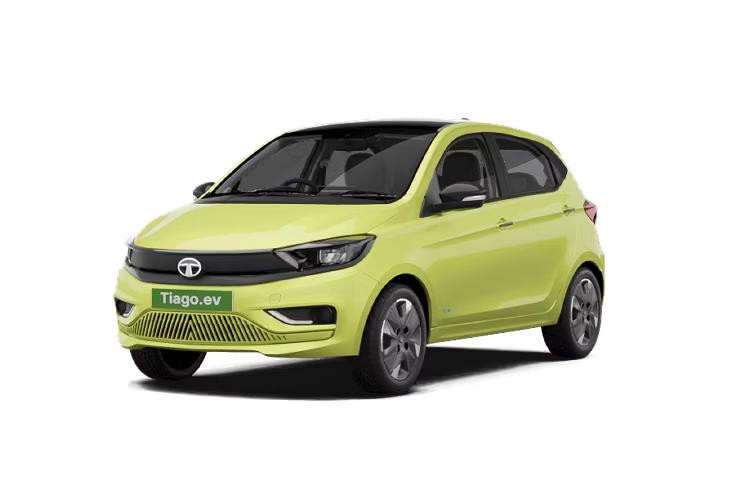
One of the most discussed Tata Tiago EV issues relates to durability and service reliability. Several owners report frequent workshop visits within months of ownership. When a new car spends more time in service bays than on the road, confidence naturally drops. These Tata Tiago EV problems in India are amplified by inconsistent service quality across cities, making ownership a gamble rather than a guarantee.
Battery Placement and Tata Tiago EV Battery Issues
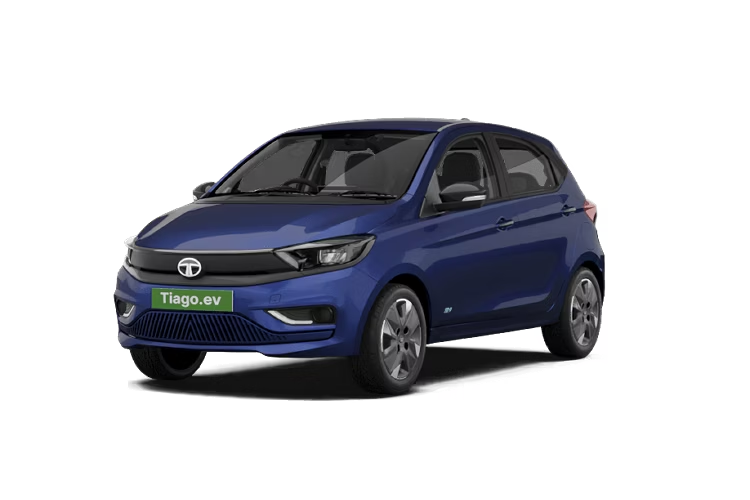
Battery design is a critical EV component, and here’s where Tata Tiago EV disadvantages become expensive. The battery pack is placed at the bottom of the car, exposing it to scratches from speed breakers and rough roads. Multiple owners have reported Tata Tiago EV battery issues where minor underbody damage voided warranty claims. I’ve seen real cases where users were asked to spend nearly ₹5.5 lakh on battery replacement due to scratches deemed “external damage.”
Tata Tiago EV Battery Failure Issues After Limited Usage
A particularly alarming concern is Tata Tiago EV battery failure issues occurring as early as 14,000 km. One owner who bought the XT LR variant in 2023 reported smooth usage for a year, followed by sudden battery damage. This is where the Tata Tiago EV disadvantages hit hardest, because the promised long-term savings disappear instantly when the battery becomes a liability.
Range Anxiety and Tata Tiago EV Range Issues
Range anxiety isn’t just psychological; it’s practical. Many users highlight Tata Tiago EV range issues, where the claimed range drops significantly in real traffic conditions with AC usage. In city driving, this may be manageable, but on longer routes, planning becomes stressful. I’ve noticed that once the range drops below expectations, owners start questioning the entire EV experience, reinforcing common Tata Tiago EV disadvantages discussed online.
Charging Infrastructure and Tata Tiago EV Charging Issues
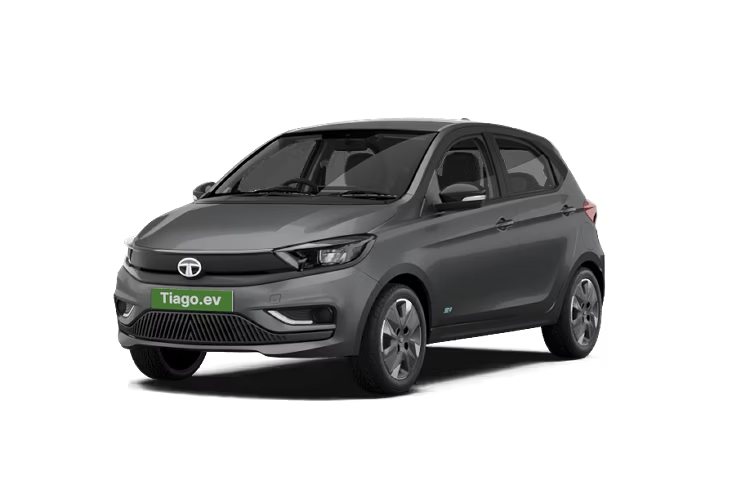
Charging remains a weak link. Tata Tiago EV charging issues are especially visible in smaller towns where public chargers are rare or unreliable. One frustrated owner summed it up bluntly: “Bakwas EV car. Jab charging station hi nahi hai to kya kar sakte hain.” Without dependable infrastructure, even the best EV feels incomplete, and this limitation magnifies the Tata Tiago EV disadvantages for daily commuters.
Tata Tiago EV Negative Reviews You Should Read Carefully
Some reviews are impossible to ignore. One owner described their experience as “Stay Away Like Plague,” stating that out of 40 days of ownership, the car spent 20 days in the workshop. AC failures, gearbox noise, and unresolved service complaints dominated their experience. Another review calls it a “Waste Of Money,” directly blaming design flaws and warranty loopholes. These Tata Tiago EV negative reviews don’t come from trolls; they come from real buyers dealing with real consequences of Tata Tiago EV disadvantages.
Practicality Concerns for Family Buyers
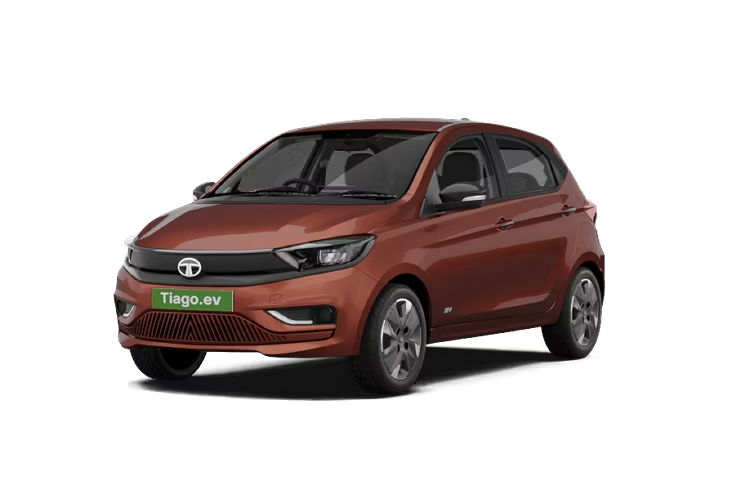
As a hatchback, the Tiago EV has limited boot space. For family use, this becomes a daily compromise. Many owners feel that a sedan suits family needs better, especially for luggage during trips. This limitation may seem minor, but over time it adds to the list of Tata Tiago EV disadvantages that affect comfort and usability.
Ownership Data Snapshot
Here’s a simple table to give context to ownership trends and concerns.
| Year | Stat | Source |
| 2023 | EV complaints related to battery warranty increased | Owner forums |
| 2024 | Public charger availability lagged behind EV sales | Industry reports |
| 2025 | Battery replacement cost remained above ₹5 lakh | Service center estimates |
Grapes-Style Comparison Table: Expectations vs Reality
| Aspect | What Buyers Expect | What Owners Report |
| Battery | Long life with warranty security | Scratches void warranty |
| Range | Consistent claimed range | Noticeable real-world drop |
| Service | Hassle-free ownership | Delays and unclear responses |
| Cost Savings | Lower long-term expense | High battery replacement cost |
When you line it up this way, the contrast clearly reflects the Tata Tiago EV disadvantages without exaggeration.
Is the Tata Tiago EV a Waste of Money?
I wouldn’t say it’s a bad car for everyone, but for many, expectations and reality don’t align. Despite the Tata Tiago EV’s disadvantages, like charging gaps, service delays, and battery vulnerability, some buyers feel misled. If you live in a city with strong charging support and drive carefully on smooth roads, you might cope. Otherwise, these disadvantages deserve serious thought.
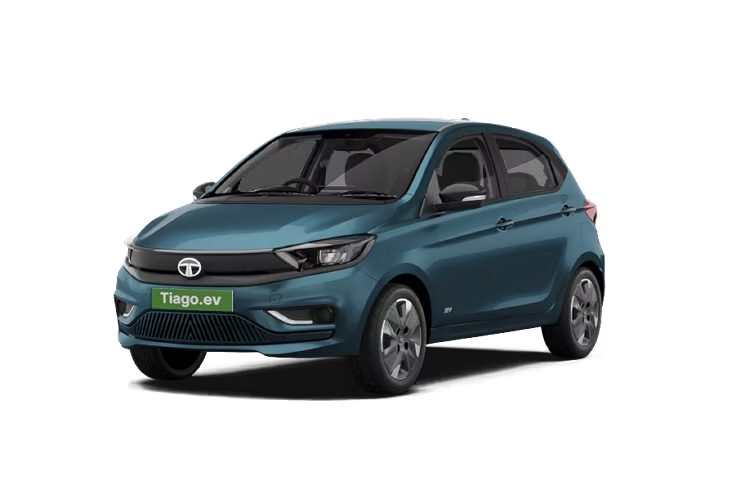
Final Thoughts on Tata Tiago EV Disadvantages
To wrap it up, the Tata Tiago EV disadvantages are not myths; they are lived experiences shared by everyday users. I always encourage buyers to look beyond launch hype and think long-term. If you value peace of mind, consistent service, and predictable costs, explore alternatives before deciding. We owe it to ourselves to choose wisely, especially when investing in new technology that should simplify life, not complicate it.

Dattu Siddi is a Commerce graduate and automobile content writer with over 2 years of blogging experience. Based in Yellapur, Uttara Kannada (Karnataka), he focuses on delivering accurate, easy-to-understand car information using real-world calculations and practical comparisons. Through cardekho24, Dattu publishes clean, user-first automotive content—especially around EVs, budget cars, ownership costs, and real-life usage—to make car research simple, transparent, and trustworthy.