
The Tata Punch EV Real Range in India: If you’ve ever searched for an electric car in India, you’ve probably seen big range numbers printed everywhere.
But deep down, you know the truth.
Real life is not a test lab.
Traffic, potholes, heat, AC usage, flyovers, sudden braking—this is India. So the real question isn’t “What does Tata claim?”
It’s “What range will the Tata Punch EV actually give me in daily Indian driving?”
After studying owner feedback, real usage patterns, and Indian road conditions, here’s the honest answer about the Tata Punch EV’s real range in India.
Table of Contents
Why Real Range Matters More Than Claimed Numbers
Most EV buyers don’t drive 300–400 km in one go.
They:
- Commute daily
- Run errands
- Drive in traffic
- Use AC almost all year
That’s why real-world range is what decides whether an EV feels stress-free or frustrating.
And this is where Tata Punch EV surprises many buyers—in a good way.
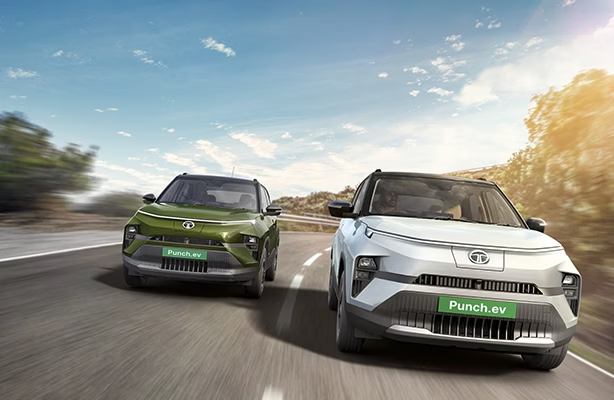
Tata Punch EV Claimed Range (For Reference)
Tata Punch EV comes with two battery options, and Tata Motors provides these ARAI-certified figures:
| Variant | Battery Size | Claimed Range |
| Medium Range | ~25 kWh | ~315 km |
| Long Range | ~35 kWh | ~421 km |
These numbers look impressive—but let’s be honest.
No EV delivers this on Indian roads.
So what does it deliver?
Tata Punch EV Real Range in India (What You’ll Actually See)
Based on Indian usage patterns, the Tata Punch EV’s real range in India depends heavily on where and how you drive.
City Driving: Where Punch EV Performs Best
In cities, EVs love traffic.
Why? Because regenerative braking keeps charging the battery while you slow down.
Typical city conditions:
- Speed: 25–45 km/h
- Stop-and-go traffic
- Moderate AC use
Real city range you can expect:
- Medium Range: 230–260 km
- Long Range: 300–330 km
Many owners say the car feels more efficient in traffic than expected.
Highway Driving: Slightly Lower, Still Practical
Highways are tougher on EVs because:
- Constant speed
- Less braking
- Higher aerodynamic drag
Best cruising speed: 70–80 km/h
Real highway range:
- Medium Range: 190–220 km
- Long Range: 260–290 km
Once you cross 90 km/h, the range starts dropping faster—just like fuel efficiency in petrol cars.
City vs Highway Real Range Snapshot
| Usage Type | Medium Range | Long Range |
| City traffic | 230–260 km | 300–330 km |
| Highway driving | 190–220 km | 260–290 km |
| Mixed usage | 210–240 km | 280–310 km |
This makes the Tata Punch EV’s real range in India very usable for most families.
Tata Punch EV Real Range With AC On (The Big Question)
Let’s not pretend—we all use AC.
How much range do you lose with AC?
- Around 8–12%
- More impact in slow traffic
- Once cabin cools, power usage stabilizes
Real Range With AC in Indian Conditions
| Driving Type | Without AC | With AC |
| City | ~250 km | ~225 km |
| Highway | ~280 km | ~255 km |
Even in peak summer, the Punch EV doesn’t suddenly become unusable—and that’s important.
What Really Affects Tata Punch EV’s Real Range in India
Small habits make a big difference.
Here’s what actually impacts your range day-to-day:
- Speed: 60–80 km/h is the sweet spot
- Driving style: Gentle acceleration = more km
- Traffic: Surprisingly good for EVs
- Terrain: Hills reduce range by 10–15%
- Tyre pressure: Often ignored, very important
- Regenerative braking: Higher regen helps in cities
This is why two owners in the same city can report different numbers.
What Real Owners Are Saying (India)
This is where things get interesting.
Real Example:
Ramesh from Pune drives around 45 km daily, mostly in traffic, with the AC always on.
He charges his Punch EV Long Range once every 5–6 days and consistently sees 300+ km per charge.
Another owner from Hyderabad reports a 270 km highway range while cruising at 75–80 km/h.
These stories repeat across forums and owner groups—and they confirm the numbers.
Is Tata Punch EV’s Real Range Enough for Indian Buyers?
For most people, yes—easily.
It works perfectly if:
- Your daily driving is under 60 km
- You mostly drive in the city
- You want low running costs
- You charge at home once or twice a week
Charging reality:
- 40 km/day → charge once a week
- 60 km/day → charge every 4–5 days
That’s less effort than visiting a petrol pump.
How to Get the Best Real Range From Tata Punch EV
Want better numbers than your neighbor? Do this:
- Drive smoothly, not aggressively
- Stay below 85 km/h on highways
- Use Eco mode in traffic
- Pre-cool the cabin while charging
- Keep tyre pressure in check
- Use regenerative braking smartly
These simple habits can improve range by 10–15%.
Tata Punch EV Real Range vs Other Small EVs
Here’s how it stacks up:
| EV | Real Range |
| Tata Punch EV (LR) | 280–310 km |
| Tata Tiago EV | 200–230 km |
| Citroën ëC3 | 230–250 km |
| MG Comet EV | 170–190 km |
The Punch EV clearly offers a strong balance of range, size, and practicality.
Final Thoughts: Tata Punch EV Real Range in India
The Tata Punch EV’s real range in India may not match brochure numbers—but it doesn’t disappoint either.
It delivers:
- Predictable daily range
- Low running costs
- Confidence for city users
- Manageable highway performance
If your driving is mostly urban with occasional trips, Punch EV feels easy, calm, and dependable—which is exactly what most EV buyers want.
FAQs—Quick Answers Buyers Search For
What is the real range of the Tata Punch EV in India?
👉 Around 230–260 km (MR) and 280–310 km (LR).
Does AC affect Tata Punch EV range a lot?
👉 Only about 8–12%.
Is the Tata Punch EV good for long drives?
👉 Yes, with planned charging stops.
How often do you need to charge it?
👉 Once every 4–7 days for most users.

Dattu Siddi is a Commerce graduate and automobile content writer with over 2 years of blogging experience. Based in Yellapur, Uttara Kannada (Karnataka), he focuses on delivering accurate, easy-to-understand car information using real-world calculations and practical comparisons. Through cardekho24, Dattu publishes clean, user-first automotive content—especially around EVs, budget cars, ownership costs, and real-life usage—to make car research simple, transparent, and trustworthy.
Pingback: 7 Shocking Truths: Tata Punch EV Real World Mileage with AC,