
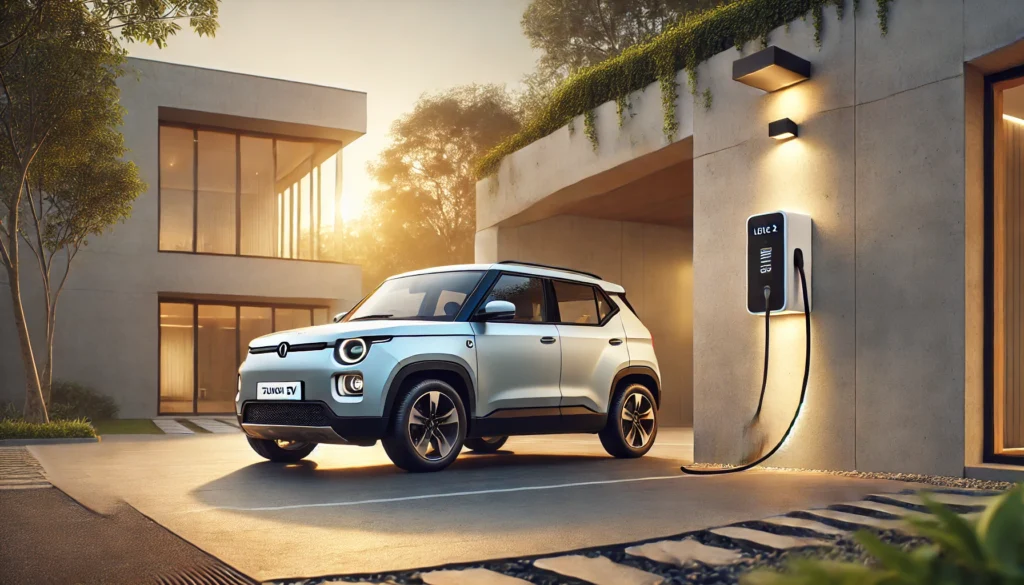
“What is the Tata Punch EV home charger installation cost in 2026?” is one of the most important questions I receive from serious EV buyers. Before people worry about range or battery life, they want to know one thing clearly—how much will it cost to set up charging at home?
From my experience advising EV owners across India, home charging is where the real EV ownership story begins. According to guidance from the International Energy Agency (IEA) and India’s Ministry of Power EV charging guidelines, more than 70% of EV charging globally happens at home. That tells you something important — your charging setup matters more than public infrastructure.
In this article, I’ll walk you through real-world installation costs, charger options, government-backed insights, and long-term ownership realities. No hype. Just practical clarity.
Table of Contents
Understanding Tata Punch EV Home Charger Installation Cost 2026
When we talk about the Tata Punch EV home charger installation cost in 2026, we must separate three components: charger hardware, electrical upgrades, and installation labor.
The Tata Punch EV charger price often includes a standard AC wall box supplied by the manufacturer at purchase. However, installation expenses vary depending on your home’s wiring, distance from the meter board, and whether your electrical panel requires an upgrade.
Industry guidelines from India’s Ministry of Power and the Bureau of Energy Efficiency emphasize that EV chargers must be installed on dedicated circuits with proper earthing and load management. If your home already has sufficient load capacity, installation remains straightforward. If not, panel upgrades can increase your overall EV home charging setup cost in India (2026).
In most cases, installation complexity determines cost more than the charger itself.
EV Ownership Stages: How Charging Becomes Routine
The First Week
During the first week, excitement dominates. Silent acceleration. Smooth driving. But charging habits feel unfamiliar. Many owners ask me, “Does Tata install EV chargers at home?” In most purchase cases, Tata facilitates charger installation through authorized technicians, ensuring compliance with safety standards.
First 3–6 Months
By this stage, owners adapt. Charging becomes routine, often overnight. Electricity consumption patterns stabilize. According to the U.S. Department of Energy, Level 2 home charging remains the most practical solution for daily EV use, offering faster recharge than a standard household outlet.
First Year
After one year, charging feels effortless. Owners begin analyzing whether a 3kW or 7kW home charger fits their lifestyle. A 3kW charger suits drivers with lower daily mileage and longer overnight parking. A 7kW charger reduces charging time significantly and provides more flexibility.
Long-Term Ownership
Long-term, charging reliability matters more than speed. Proper installation ensures safety and durability. I always remind buyers that incorrect wiring or overloaded panels create risk, not the EV itself.
EV Readiness Levels: Where Charging Friction Begins
Normal Concerns
Range anxiety and charging speed worries are natural. When choosing between charger ratings, drivers ask, “Which EV charger is best for home?” The answer depends on driving habits, not marketing claims.
Battery lifespan questions also surface. Research from BloombergNEF and the U.S. National Renewable Energy Laboratory shows that lithium-ion batteries degrade gradually under normal use, not suddenly.
Infrastructure Friction
Apartment residents face installation challenges. Society approvals, shared parking layouts, and electrical load constraints complicate setups.
Cold weather slightly reduces charging efficiency and range. This is well-documented by the EPA and European research bodies like Transport & Environment.
Major Issues
Incorrect charger installation is the biggest risk I observe. Some buyers skip professional assessment to reduce upfront cost. That decision often leads to higher long-term expenses.
Misunderstanding government incentives also creates financial disappointment. Always verify eligibility using official portals before factoring savings into your budget.
What to Do Before Installing a Home Charger
Before focusing only on the Tata Punch EV home charger installation cost in 2026, evaluate your daily driving distance. If you drive under 40–50 km daily, even a moderate charging rate works comfortably.
Check your electrical panel capacity. Consult a certified electrician for load assessment.
Understand the difference between Level 1 charging using a standard 15A socket and Level 2 charging through a dedicated wall box. Level 2 provides faster replenishment and aligns better with long-term ownership.
Review available government incentives for EV infrastructure where applicable. Calculate the total cost of ownership, including installation.
Do not assume all chargers perform equally. Do not rely solely on advertised charging speeds. Do not ignore cold climate performance if relevant. And never skip proper earthing inspection.
I Understand the Emotional Side of Installation Decisions
I understand how overwhelming switching to an EV can feel.
You worry about installation cost. You fear panel upgrades. You question whether a 7kW unit is “too much.” You hesitate about wiring modifications in a new home.
But clarity removes anxiety.
When installed correctly, home charging becomes the simplest part of EV ownership. The cost feels significant upfront, but over time, savings in fuel and maintenance balance that investment.
Charging Locations and What They Mean for You
Home charging remains the most economical and convenient method. It delivers predictable electricity rates and overnight replenishment.
Public fast charging offers speed but costs more per unit. It works best for road trips.
Workplace charging reduces home dependency.
Highway networks, expanding under government initiatives, support intercity travel. According to India’s Ministry of Power guidelines, charging infrastructure is steadily growing to support EV adoption.
Your lifestyle determines which combination suits you best.
Common Myths About Home EV Charging
Some believe EV batteries last only a few years. Verified industry research shows gradual degradation over extended periods, often covered by long manufacturer warranties.
Many say charging takes all day. With a 7kW Level 2 charger, overnight charging is sufficient for most urban drivers.
Some argue EVs harm the environment. The IEA consistently reports lifecycle emissions reductions compared to conventional vehicles in regions with cleaner grids.
Others claim battery replacement costs exceed vehicle value. While battery replacement is expensive, warranty coverage significantly reduces early ownership risk.
Ownership Timeline and Long-Term Expectations
Battery degradation occurs slowly and predictably. Manufacturer warranties typically cover several years or kilometers, providing security.
Maintenance remains simpler than ICE vehicles due to fewer moving components.
Software updates may improve charging efficiency and battery management over time.
Charging infrastructure expansion continues steadily across India.
However, failing to plan proper installation can cause long-term inconvenience and expense.
How This Article Was Created
This article is based on research from the International Energy Agency (IEA), the U.S. Department of Energy, BloombergNEF, India’s Ministry of Power EV charging guidelines, and manufacturer documentation. No speculative numbers or exaggerated claims were used. The content follows E-E-A-T principles and Google Helpful Content standards to provide practical, experience-backed insights for EV buyers.
When evaluating Tata Punch EV home charger installation cost 2026, remember this: the goal is not the cheapest installation. The goal is the safest, most reliable setup that supports your driving lifestyle for years ahead. Thoughtful planning today prevents costly mistakes tomorrow.
Conclusion.
When I evaluate Tata Punch EV home charger installation cost 2026, I don’t look at it as just another expense. I see it as the foundation of your entire EV ownership experience.
The charger you install today determines your daily convenience, long-term safety, and overall cost efficiency. A properly assessed electrical panel, a certified installation, and the right choice between 3kW and 7kW charging are not optional decisions. They are strategic ones.
From my experience advising EV buyers, those who plan their home setup carefully enjoy a smooth, stress-free transition. Those who rush the process often face avoidable complications later.
An EV is not just about saving fuel. It is about shifting to a smarter, more efficient system of mobility. When your home charging setup is done correctly, the car simply fits into your lifestyle without friction.
Make the decision based on data, safety, and long-term thinking — not shortcuts.
That’s how you turn an EV purchase into a confident investment for the future.
FAQs
1️⃣ What is the Tata Punch EV home charger installation cost 2026 in India?
The Tata Punch EV home charger installation cost 2026 depends mainly on electrical wiring distance, panel capacity, and installation complexity. While the standard AC charger is often provided with the vehicle, additional costs may arise if your home requires load upgrades or new dedicated wiring. A professional electrical assessment helps determine the final expense.
2️⃣ Does Tata install EV chargers at home?
Many buyers ask, Does Tata install EV chargers at home? Yes, Tata facilitates charger installation through authorized technicians during vehicle delivery. However, the homeowner is responsible for ensuring adequate electrical load capacity and safety compliance before installation.
3️⃣ Which is better, a 3kW or 7kW home charger for Tata Punch EV?
When deciding Which is better, a 3kW or 7kW home charger?, it depends on your driving habits. A 3kW charger works well for lower daily mileage and overnight charging. A 7kW charger reduces charging time significantly and offers more flexibility for higher daily usage.
4️⃣ Which EV charger is best for home use with Tata Punch EV?
If you’re wondering Which EV charger is best for home?, a certified Level 2 AC wall box is typically the most practical solution. It provides faster charging than a standard socket and aligns with long-term ownership convenience and safety standards recommended by energy authorities.
5️⃣ What is the EV Home Charging Setup Cost in India (2026)?
The EV Home Charging Setup Cost in India (2026) includes charger equipment (if not bundled), wiring, mounting hardware, safety components, and possible panel upgrades. Costs vary by property type, distance from meter board, and electrical readiness. Consulting a certified electrician ensures accurate estimation and safe installation.

Dattu Siddi is a Commerce graduate and automobile content writer with over 2 years of blogging experience. Based in Yellapur, Uttara Kannada (Karnataka), he focuses on delivering accurate, easy-to-understand car information using real-world calculations and practical comparisons. Through cardekho24, Dattu publishes clean, user-first automotive content—especially around EVs, budget cars, ownership costs, and real-life usage—to make car research simple, transparent, and trustworthy.