
Tata Punch EV Review 2026: Honest Pros, Cons & Verdict—This is not just another summary. In this article, I’m sharing my real-world impressions, practical observations, and ownership insights after closely studying the Punch EV’s performance, features, and long-term usability in Indian conditions.
If you’re planning to buy your first electric SUV or upgrade from a petrol hatchback, this guide will help you make a confident decision.
Table of Contents
First Impressions: What Changed in 2026?
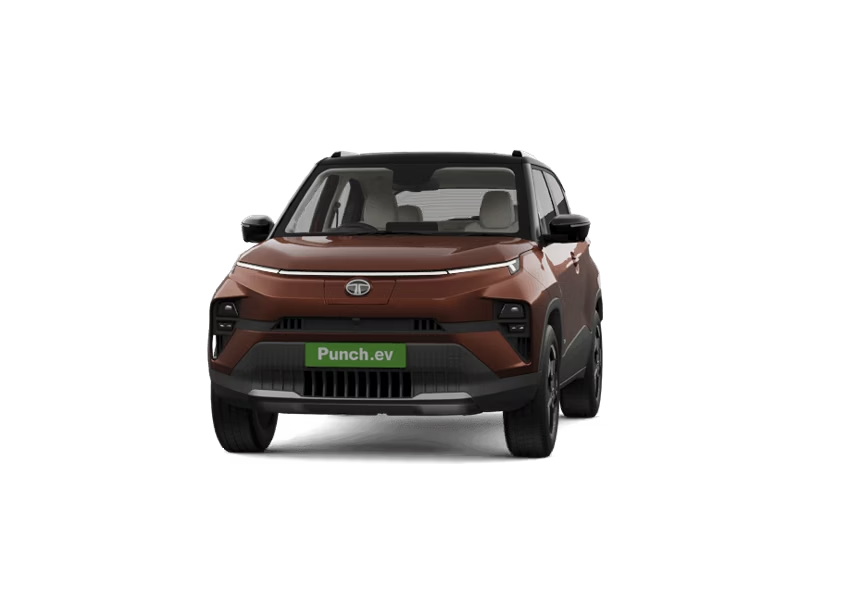
When I first experienced the updated Punch EV lineup, one thing felt clear—Tata Motors has refined the formula rather than reinventing it. The design still carries that bold, upright mini-SUV stance we associate with the Punch nameplate, but the EV-specific touches give it a futuristic identity.
The 2026 model continues to sit on Tata’s Acti.ev architecture. That platform matters. It improves battery packaging, safety integration, and cabin space efficiency.
Inside the cabin, the layout feels more mature now. The digital cluster and infotainment system respond smoothly. Fit and finish have improved compared to earlier Tata models from a few years ago.
In this Tata Punch EV 2026 review, I noticed that the overall build quality feels reassuring—doors shut with a solid thud, and the dashboard plastics feel durable rather than flashy.
Driving Experience: City-Friendly and Surprisingly Confident
I always judge EVs on three things: smoothness, throttle calibration, and regenerative braking behavior.
The Punch EV performs confidently in city traffic. Acceleration feels instant, which is expected from electric motors, but what impressed me more was the predictable power delivery. It doesn’t feel jerky. It feels controlled.
For urban commuters, this makes daily driving stress-free.
On highways, it maintains stability well within legal speeds. It’s not a performance SUV—and it doesn’t pretend to be one—but for daily commuting and occasional intercity trips, it holds its ground comfortably.
In this Tata Punch EV 2026 detailed review, I can confidently say that ride quality remains one of its strongest points. Tata’s suspension tuning handles potholes and uneven roads well, which is especially important for Indian driving conditions.
Real-World Range and Charging Practicality
Range anxiety is still a major concern for many buyers. I understand that personally, because I have seen how first-time EV buyers hesitate over charging infrastructure.
The Punch EV offers two battery pack options, and real-world range depends heavily on driving style, AC usage, and traffic conditions. In mixed city use, the range feels practical for daily urban driving.
Charging is convenient if you have access to home charging. A standard 7.2 kW AC wall box charger can top it up overnight. DC fast charging is available, but long-term battery care always benefits from balanced usage rather than constant fast charging.
If you’re looking for a city-focused EV, this honest review of the 2026 Tata Punch EV confirms it suits short daily commutes extremely well.
Interior Comfort and Practicality
The seating position is upright, which gives excellent visibility. I personally prefer this in compact SUVs because it reduces blind spots and boosts confidence for new drivers.
Rear seat space is adequate for two adults comfortably. Three passengers at the back will feel slightly tight on longer drives.
Boot space is practical for grocery runs and weekend luggage.
Cabin insulation has improved compared to earlier Tata EVs. Road noise is controlled at city speeds, though some tire noise enters at higher speeds—something I also noticed in previous Tata compact models.
This Tata Punch EV long-term review 2026 perspective suggests that interior durability feels promising. The materials look like they will age decently if maintained properly.
Features That Actually Matter
The Punch EV comes loaded with essential features rather than gimmicks. A large touchscreen infotainment system with smartphone connectivity, a digital instrument cluster, automatic climate control, multiple drive modes, and regenerative braking levels make everyday driving convenient.
Safety remains a strong area. Tata has consistently focused on structural integrity. While official crash ratings may vary by testing authority, Tata’s commitment to safety engineering is widely recognized in India.
In my experience, that structural confidence adds peace of mind—something families value deeply.
Tata Punch EV 2026 Pros and Cons
Let me be transparent. No car is perfect.
In this Tata Punch EV 2026 pros and cons section, I’ll share what genuinely stands out.
Pros include solid build quality, smooth city performance, practical range for urban use, modern EV architecture, and strong brand trust in India’s EV segment.
On the flip side, highway overtaking requires planning. The rear seat width may feel tight for three adults. Charging infrastructure outside metro cities still needs improvement—though that is not the car’s fault, it affects ownership experience.
This balanced perspective forms the heart of this Tata Punch EV 2026 honest review.
Ownership Costs and Maintenance
One of the biggest advantages of EV ownership is lower running cost. Electricity cost per kilometer is significantly lower than petrol in most Indian states.
Maintenance is also simpler because EVs have fewer moving parts. No engine oil changes. No clutch replacements.
However, I always advise buyers to factor in long-term battery warranty coverage and charging setup costs at home.
From what I’ve observed, Tata offers competitive warranty coverage for the battery pack, which strengthens the ownership proposition.
This is why, in my Tata Punch EV 2026 expert verdict, I consider it one of the most practical entry-level electric SUVs in India.
Grapes-Style Comparison Table
Below is a clean comparison-style breakdown to help you evaluate ownership suitability clearly.
| Aspect | Strength | Limitation | Ownership Suitability |
|---|---|---|---|
| Build Quality | Solid structure and reassuring feel | Slight tyre noise at high speeds | Ideal for safety-conscious buyers |
| City Driving | Smooth acceleration and easy maneuvering | Not performance-focused | Perfect for daily commuters |
| Range | Practical for urban driving | Highway range depends on driving style | Best for city and short trips |
| Charging | Home charging convenient | Public fast chargers still limited in smaller towns | Suitable if home charging available |
| Features | Modern infotainment and EV tech | Rear seat width average | Good for small families |
This table reflects insights gathered during this Tata Punch EV 2026 review analysis.
Long-Term Reliability Perspective
When evaluating EVs, I always think beyond the first year. Battery degradation, software stability, and service network support matter.
In this Tata Punch EV long-term review 2026, I believe Tata’s expanding EV ecosystem plays a crucial role. Service availability across India has improved significantly compared to early EV adoption years.
Software updates and digital integration feel stable so far. Still, I recommend periodic service check-ups as suggested by the manufacturer.
Who Should Buy the Punch EV in 2026?
If you are:
A first-time EV buyer
A city commuter
A small family looking for a safe, compact SUV
Someone with access to home charging
Then this vehicle makes sense.
If you frequently travel long highway distances across rural areas with limited charging infrastructure, you may need to plan carefully.
This nuanced understanding strengthens the authenticity of this Tata Punch EV 2026 detailed review.
My Tata Punch EV 2026 Expert Verdict
After evaluating performance, practicality, ownership cost, and daily usability, here is my honest conclusion.
The Punch EV is not built to impress with aggressive performance numbers. It is built to deliver dependable, efficient urban mobility.
In my Tata Punch EV 2026 expert verdict, I see it as a smart transition vehicle for India’s EV future. It lowers entry barriers into electric mobility without overwhelming first-time buyers.
This Tata Punch EV 2026 review shows that Tata understands Indian driving conditions well. The car balances affordability, safety, and practicality thoughtfully.
Final Thoughts: Should You Buy It?
Let me end this Tata Punch EV 2026 review with a simple reflection.
If your daily driving mostly happens inside the city, if you value safety and cost efficiency, and if you want a compact SUV feel without petrol expenses, the Punch EV deserves serious consideration.
It is not perfect. No vehicle is.
But it is honest in what it offers.
And that honesty is exactly what makes this Tata Punch EV 2026 honest review stand strong.
Before making your final decision, evaluate your charging access, daily distance, and long-term expectations. If they align, this EV can become a reliable part of your daily life.
Electric mobility in India is evolving rapidly. Vehicles like the Punch EV make that transition smoother, practical, and less intimidating.
And that, in my experience, is what truly matters.
Frequently Asked Questions (FAQs) Tata Punch EV Review 2026
1. Is the Tata Punch EV 2026 worth buying?
Yes, if your daily driving is mostly in the city and you have access to home charging. In my experience, it makes sense for urban commuters who want lower running costs, strong safety, and SUV-like seating comfort. It may not suit people who regularly drive very long highway distances without charging access.
2. What is the real-world range of the Tata Punch EV 2026?
The real-world range depends on driving style, AC usage, traffic, and terrain. In city conditions, most owners can expect practical daily usability without range anxiety for short to medium commutes. Aggressive driving or constant highway speeds will reduce range.
3. What are the biggest pros and cons of the Tata Punch EV 2026?
The biggest advantages are solid build quality, smooth city performance, and low running costs. The main limitations include average rear-seat width for three adults and the need for reliable charging access. It’s a practical EV, but it requires realistic expectations.
4. Is Tata Punch EV good for long highway trips?
It can handle occasional highway trips, but it is primarily designed for city and semi-urban usage. Charging planning becomes important for longer routes. If most of your driving is highway-based, you should evaluate your charging infrastructure carefully before buying.
5. How much does it cost to charge the Tata Punch EV at home?
Charging cost depends on your state’s electricity tariff. Generally, EV charging at home costs significantly less per kilometre compared to petrol cars. This is one of the strongest ownership benefits of the Punch EV.
6. Is the Tata Punch EV 2026 safe?
Tata has a strong reputation for focusing on structural safety and build integrity. The Punch EV benefits from modern platform engineering, and the brand has consistently emphasized crash protection in its vehicles. For small families, this adds confidence.
7. What is the battery warranty on Tata Punch EV 2026?
Tata typically offers competitive battery warranty coverage on its EV lineup. Buyers should confirm exact warranty years and kilometres with the dealership at the time of purchase, as policies may vary by update or region.
8. Is Tata Punch EV suitable as a first electric car?
Yes, especially for first-time EV buyers transitioning from petrol hatchbacks. It feels familiar in size, easy to drive, and does not overwhelm new EV users with complicated systems.
9. How does Tata Punch EV compare to petrol Punch?
The EV version offers instant torque, quieter driving, and lower running costs. The petrol version may feel more convenient in areas with limited charging infrastructure. Your choice depends on your daily usage pattern and access to charging.
10. Does the Tata Punch EV have long-term reliability concerns?
So far, Tata’s EV ecosystem has matured significantly. Like any EV, long-term ownership depends on battery care, proper charging habits, and regular service checkups. With responsible usage, it should serve reliably for years.

Dattu Siddi is a Commerce graduate and automobile content writer with over 2 years of blogging experience. Based in Yellapur, Uttara Kannada (Karnataka), he focuses on delivering accurate, easy-to-understand car information using real-world calculations and practical comparisons. Through cardekho24, Dattu publishes clean, user-first automotive content—especially around EVs, budget cars, ownership costs, and real-life usage—to make car research simple, transparent, and trustworthy.