
Understanding Nissan LEAF charging time is just one of those practical details that will make or break the experience if you’re thinking about going electric. Charging an electric vehicle isn’t exactly like a quick stop at a filling station; it is more a rhythm that you learn. Once you get used to it, it becomes second nature. Whether you’re plugging in at home after a long day or topping up at a public station on the go, knowing how long it takes to charge your Nissan LEAF makes daily driving easier and more predictable.
Table of Contents
How Long Does It Take to Charge a Nissan LEAF?
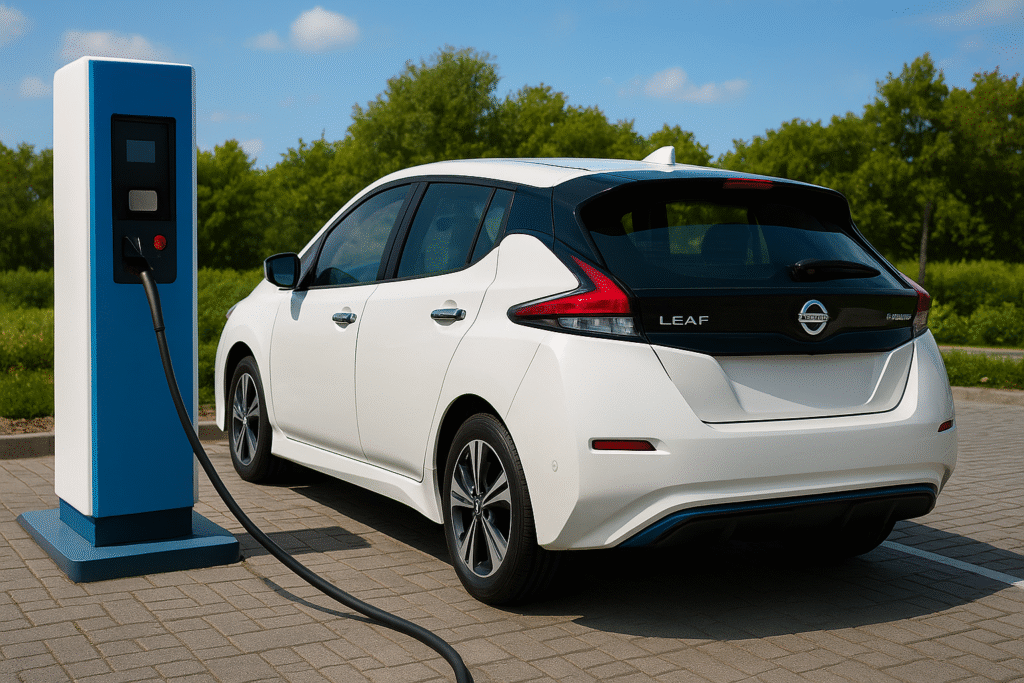
In simple terms, the charging of a Nissan LEAF takes anywhere from 40 minutes to almost an entire day, depending on which charger you happen to be using. A DC fast charger can fill most of the battery in approximately 40 minutes, while a Level 2 home or public charger generally takes 8 to 11 hours. A Level 1 household outlet (120V) is much slower and may take as long as 24 hours for a full charge.
The difference comes down to two main factors: battery size and charging type. If you’ve got access to a Level 2 charger or a public fast-charging station, you’ll spend far less time waiting and more time driving. But even with slow charging, once you build it into your routine—like charging overnight—it hardly feels inconvenient.
Charging Time by Level
Every Nissan LEAF supports multiple types of charging, and each one has its own pace and purpose.
Level 1 (120V):
This uses a regular household outlet, the kind you’d plug your laptop into. It’s the slowest method, taking around 20 to 24 hours for a complete charge. That might sound long, but for light daily driving, it’s surprisingly practical. Plug in before bed, and by morning, you’ll have enough range for errands or a commute.
Level 2 (240V):
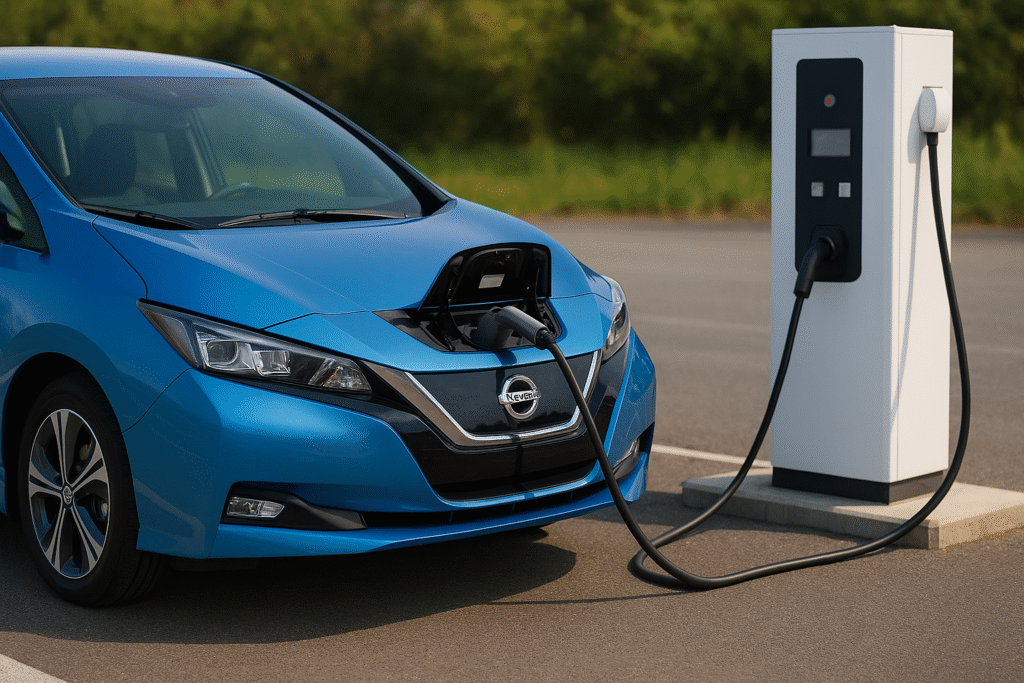
For most LEAF owners, Level 2 is the sweet spot. Charging takes about 6 to 11 hours for a full recharge and is what you’ll find at most public charging stations—or can install in your own home. If you have a Level 2 charger installed, you can completely fill up on electrons while you sleep or over the course of a workday, making it the most convenient option for regular use.
DC Fast Charge (Level 3):
DC fast charging is when you’re on the highway or in a hurry. It can charge the battery up to 80% in 40–60 minutes. These high-powered stations are usually along major travel routes, near rest areas, and often near shopping centers. They’re great for quick top-ups on long trips, though they’re not ideal for daily use since frequent fast charging can wear down the battery a bit faster over time.
What Affects Nissan LEAF Charging Time?
While the level of charge is the most important factor, several other factors determine how long your LEAF will take to recharge.
Battery Size:
Different Nissan LEAF models provide different battery capacities, with the most common ones coming in at 40 kWh or 62 kWh. The larger battery gives you more driving range but naturally takes longer to charge. Just like filling a larger fuel tank, it just takes a little more time.
Charger Type:
This is a simple one: the faster the charger, the shorter the wait. DC fast chargers are lightning quick, Level 2 chargers strike a good balance between speed and cost, and Level 1 outlets are for slow-and-steady overnight charging.
Starting Charge:
You almost never charge from zero; most people plug in when the battery goes to 30–40%. That means you’re often topping up rather than doing a full recharge, cutting down the total time considerably.
Battery Health:
Like any other rechargeable battery, your LEAF’s battery may lose a little efficiency with age. A well cared-for one charges faster and holds the power better. Keeping software updated and avoiding extreme heat or cold helps maintain good battery health over time.
Living with a Nissan LEAF: real-world charging experience
For most motorists, charging becomes part of a daily rhythm rather than a chore. Plug in at night, much like you charge your cell phone before bed; wake up, and your LEAF is ready to roll. Even if you rely on public stations, you can easily fit charging stops into your schedule: grab coffee, run an errand, and you’re good to go.
Weather can play a part in that, too. In cold temperatures, charging is slower because the battery has to be warmed up first before it can accept power efficiently. On the other side, very hot conditions may trigger the system to reduce charging speed slightly as an effective way of protecting the battery.
It feels intuitive, almost effortless, once you get used to charging.
Statistical Data Table
| Year | Stat | Source |
| 2020 | Average EV charging session duration: 8.2 hours | U.S. Department of Energy |
| 2021 | 85% of EV owners charge primarily at home | Statista |
| 2022 | DC fast chargers increased by 42% across the U.S. | IEA Global EV Outlook |
| 2023 | Average Nissan LEAF battery size: 40–62 kWh | Nissan USA |
| 2024 | 90% of public stations support Level 2 charging | EVgo Network Data |
Comparison Table: Nissan LEAF Charging Options
| Feature | Level 1 (120V) | Level 2 (240V) | DC Fast (Level 3) |
| Charging Time | 20–24 hours | 6–11 hours | 40–60 minutes (to 80%) |
| Convenience | High (home outlet) | Very high (home/public) | Moderate (public only) |
| Cost to Install | None | Moderate | High |
| Battery Health Impact | Minimal | Minimal | Slightly higher |
| Ideal Use Case | Overnight charging | Daily use | Long trips or quick stops |
Is It Worth Installing a Home Charger?
If you drive a Nissan LEAF daily, investing in a Level 2 home charger is often the smartest move. It provides the flexibility to charge faster without relying on public stations. Many popular home charging units are compact, wall-mounted, and compatible with most EVs.
One great option is the Amazon.com (Sponsored) EV charger, known for its reliability, safety, and fast performance. Installing one not only saves time but can also increase your property’s value as EV ownership continues to grow.
Maximizing Efficiency When Charging Your Nissan LEAF
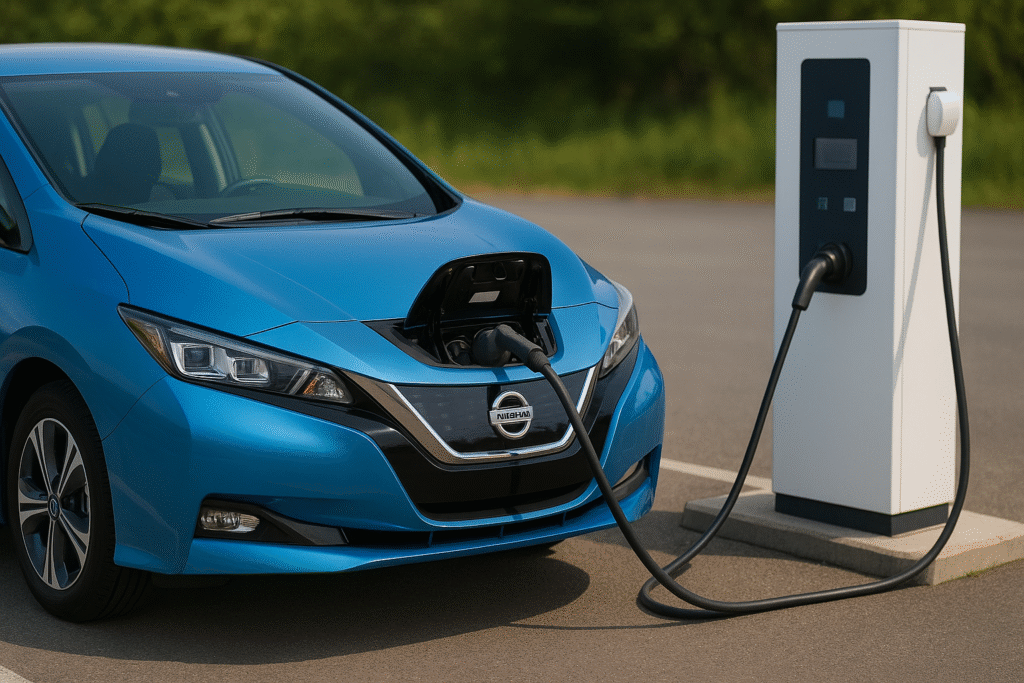
To get the best performance and lifespan from your battery, try following a few practical habits. Avoid charging to 100% every time unless you need maximum range, as maintaining the charge between 20% and 80% is healthier for lithium-ion batteries. Also, keep your charging port clean and check for software updates, since newer versions can improve charging management.
When traveling, apps like PlugShare or ChargePoint can help you find nearby fast chargers. They also show real-time availability, saving you time and frustration during longer drives.
Conclusion: Nissan LEAF Charging Time is All About Smart Planning
At the end of the day, Nissan LEAF charging time isn’t something to stress about; it’s just something to understand and plan around. Once you find the setup that fits your lifestyle, it all just becomes second nature. Whether you rely on a 120V outlet at home, a 240V Level 2 charger, or the occasional fast charge on a road trip, the LEAF will adapt beautifully to what you need. It’s part of what makes owning this EV so easy and rewarding. The Nissan LEAF isn’t just a car—it is a statement on living cleaner, driving smarter, and embracing the future of mobility.
So the next time someone asks you, “How long does it take to charge a Nissan LEAF?” you should be ready with an answer—and the confidence of one who’s driving the future.

Dattu Siddi is a Commerce graduate and automobile content writer with over 2 years of blogging experience. Based in Yellapur, Uttara Kannada (Karnataka), he focuses on delivering accurate, easy-to-understand car information using real-world calculations and practical comparisons. Through cardekho24, Dattu publishes clean, user-first automotive content—especially around EVs, budget cars, ownership costs, and real-life usage—to make car research simple, transparent, and trustworthy.